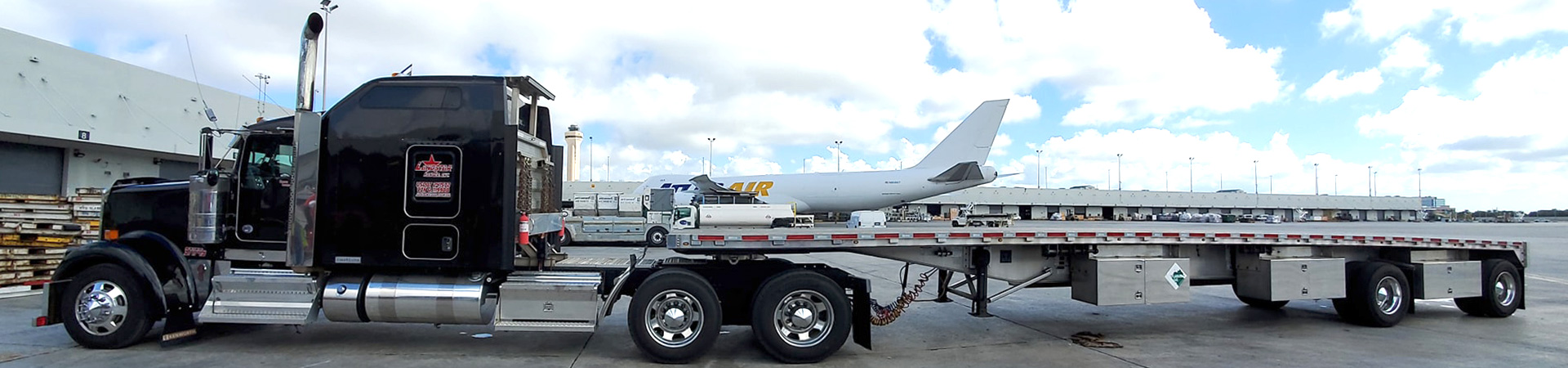
When you let SPL Agency LLC move your freight, you gain access to the unmatched power of Landstar’s extensive network. This means you benefit from reliable shipping capacity, our access to advanced technology, and a wide range of transportation solutions.
We are committed to providing our customers with quality service. We will work closely with you to develop the best logistics plan for your supply chain. After all, the success of our company is based on your success.
You can trust that SPL Agency LLC of Las Vegas will keep your supply chain moving and get your freight delivered safely and on-time.
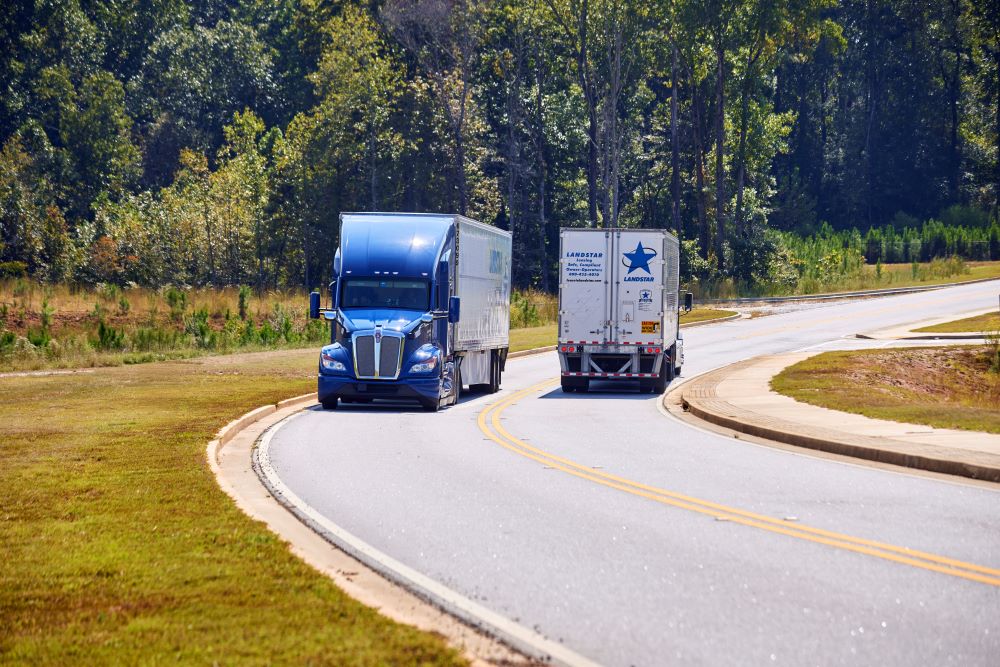
Landstar agents are independent business owners with the tools and support of a multibillion-dollar company and the experience to provide custom shipping solutions and dedicated customer service.

SPL Agency LLC has access to a network of thousands of Landstar exclusive owner-operators who also have a vested interest in delivering customers’ freight on-time and damage-free. Plus, we have access to 70,000+ other approved carriers in the Landstar network, and one of the nation’s largest collections of van trailers and specialized transport equipment.

Every independent Landstar agency has a Landstar Safety Officer (LSO) on staff. LSOs support customer safety initiatives and promote overall safe, secure, compliant deliveries.

SPL Agency LLC is supported by Landstar’s state-of-the-art technology, ranging from analytics to a proprietary TMS to pricing tools, which empower us to deliver customized transportation solutions to customers.

Jason Gomes
Owner | Logistics Specialist
Shipping to SEMA 2026: What Exhibitors Need to Know Before Sending Freight to Las Vegas
The 2026 SEMA Show is approaching quickly, and for exhibitors, now is the time to make sure transportation is part of the show plan—not something left until the final week.
SEMA 2026 takes place November 3–6 at the Las Vegas Convention Center, bringing thousands of automotive products, manufacturers, suppliers, vehicles, displays, and industry professionals to Las Vegas.
For exhibitors, getting the booth designed and the products ready is only part of the job. Everything still has to arrive in Las Vegas at the right location, on the right day, with the right paperwork and enough time to get it onto the show floor.
At SPL Agency, we're based in Las Vegas and specialize in convention and trade show transportation. Whether you're shipping a few pallets, a full truckload, an oversized display, a vehicle-related exhibit, or dealing with a last-minute freight emergency, careful planning can make the difference between a smooth move-in and a very stressful start to SEMA.
Here are some of the most important things SEMA exhibitors should know before sending freight to Las Vegas.
One of the first decisions is where your freight should be delivered.
For SEMA 2026, exhibitors currently have two primary options:
Advance Warehouse: Freight can be shipped in advance to the Freeman warehouse. SEMA currently lists the advance warehouse receiving period as September 24 through October 22, 2026, although the dates are subject to change.
Direct to Show Site: Freight can also be delivered directly to the Las Vegas Convention Center, but it must arrive on the exhibitor's assigned target date. Drivers delivering directly to the convention center must first check in at the Freeman Marshaling Yard to receive a freight-door assignment.
For many exhibitors, advance warehouse delivery can provide an additional level of predictability. Freeman coordinates delivery of advance freight to the booth according to the assigned target time.
Direct-to-show shipping can work very well too, but timing becomes much more critical.
The important thing is to make that decision before the freight is sitting on a loading dock waiting for instructions.
A normal commercial delivery might have a delivery appointment.
Convention freight has something else exhibitors need to understand:
Target dates and times.
SEMA assigns freight target dates according to booth numbers. These dates determine when freight transported by common carrier should arrive at the Las Vegas Convention Center.
Missing your assigned target date can potentially result in additional material-handling charges. Exhibitors using the advance warehouse have their freight delivered to their exhibit space according to their designated target date.
Don't assume that simply arriving in Las Vegas before the show means your shipment is on time.
Your target date matters.
When booking transportation, provide your logistics provider with:
SEMA booth number
Assigned freight target date
Delivery instructions
Shipping labels
Exhibitor name
Number of pieces
Dimensions and weight
Special handling requirements
The more information available when transportation is booked, the easier it is to develop the correct plan.
This is an important distinction for first-time exhibitors.
Your freight carrier transports your shipment to Las Vegas.
Once the shipment reaches the convention logistics system, material handling covers services such as unloading the freight, delivering it to your booth, storing empty containers, returning those containers after the show, and eventually moving outbound freight back to the carrier.
For SEMA 2026, Freeman is the exclusive provider of material-handling services at the show.
Transportation and material handling should therefore be considered as two separate parts of your logistics budget.
Your transportation provider's role is to get your freight where it needs to be, when it needs to be there, while following the delivery procedures established by the show.
Las Vegas handles major conventions throughout the year, and SEMA is one of the largest events on the city's calendar.
Waiting until just a few days before your required pickup can limit your transportation options.
As capacity becomes tighter, exhibitors may encounter:
Higher transportation rates
Fewer available trucks
Limited pickup flexibility
Increased risk of missing target dates
Fewer specialized equipment options
This becomes even more important if you're shipping oversized displays, machinery, vehicles, large automotive components, or equipment requiring flatbed or specialized transportation.
If you know what you're shipping, start planning now.
One of the easiest ways to create problems with convention freight is providing inaccurate shipment information.
Before requesting transportation, verify:
Length × Width × Height
and
Total Weight
Also provide the total number of pallets, crates, cases, vehicles, or pieces.
Why does this matter?
A shipment originally described as four standard pallets can become a very different transportation requirement if the pallets are oversized, unusually tall, or heavier than expected.
Accurate information allows your logistics provider to determine whether the shipment requires:
LTL
Full truckload
Dry van
Flatbed
Step deck
Expedited equipment
Specialized heavy haul
Getting the equipment right from the beginning helps avoid unnecessary complications at pickup.
Trade show freight goes through multiple stages before reaching your booth.
Clear labeling is essential.
Each pallet, crate, carton, or case should identify information such as:
Exhibitor Name
SEMA Show 2026
Booth Number
Piece Number — for example, 1 of 6
Destination information specified by the show
Use the official SEMA/Freeman shipping labels and instructions available through the Exhibitor Service Manual rather than creating your own delivery instructions. The 2026 manual contains separate labels and guidance for advance warehouse shipments, direct-to-show freight, hanging signs, and other shipment types.
SEMA isn't an ordinary trade show.
Exhibitors may be transporting:
Custom automotive components
Engines and powertrain equipment
Wheels and tires
Fabrication equipment
Vehicle displays
Large booth structures
Automotive lifts
Machinery
Custom-built exhibits
Prototype products
High-value equipment
Some shipments simply don't fit into a standard pallet-and-dry-van transportation plan.
If your exhibit requires a flatbed, step deck, specialized trailer, tarping, oversized permits, or other special handling, involve your logistics provider early.
Specialized transportation requires more planning than ordinary freight.
Truck transportation is extremely dependable, but no logistics provider controls every variable.
Weather, road closures, mechanical issues, traffic, loading delays, and facility congestion can all affect transit.
When a shipment is going to a warehouse or ordinary commercial receiver, a delay may be inconvenient.
When a shipment contains the primary display for a major trade show, a delay can become a serious problem.
Avoid designing a transportation schedule where everything has to work perfectly.
Whenever possible, create some breathing room between pickup and the required delivery date.
Despite everyone's best planning, SEMA freight emergencies happen.
A display component isn't finished on time.
Marketing materials arrive late.
A product gets left behind.
Replacement equipment needs to be sent immediately.
A critical component gets damaged during setup.
This is when expedited and time-critical transportation can become extremely valuable.
SPL Agency can coordinate expedited transportation for last-minute shipments that cannot follow a traditional freight schedule.
Depending on the shipment, solutions may include:
Expedited cargo vans
Sprinter vans
Straight trucks
Dedicated dry vans
Hotshot transportation
Team-driver transportation
When the booth opens Tuesday morning, knowing that your missing freight is still sitting 1,000 miles away doesn't help.
Sometimes the priority isn't finding the cheapest truck.
It's finding the right truck immediately.
One of the most common trade show logistics mistakes happens after the event.
Everyone plans the inbound shipment.
Nobody plans the outbound shipment.
Before SEMA begins, know:
Where your freight is going after the show
Who your outbound carrier will be
What equipment you'll need
Whether the freight is returning to your facility or moving to another event
Who will be responsible for shipping paperwork
Your expected outbound schedule
If SEMA is only one stop on a larger trade show tour, tell your logistics provider.
We may be able to build a transportation strategy around your complete event schedule rather than treating each shipment independently.
Convention freight is different from ordinary commercial freight.
And moving freight into Las Vegas presents its own set of challenges.
SPL Agency is based here.
We understand that convention transportation involves much more than getting a truck from Point A to Point B. It involves scheduling, communication, target dates, driver coordination, marshaling procedures, specialized equipment, and sometimes solving problems very quickly.
As an Independent Agency of Landstar, SPL Agency combines local Las Vegas knowledge with access to Landstar's transportation capabilities.
Our convention logistics services include:
Less-Than-Truckload (LTL)
Full Truckload
Dedicated Dry Van
Expedited & Time-Critical Transportation
Flatbed
Step Deck
Hotshot
Specialized Heavy Haul
Over-Dimensional Transportation
Final Mile Coordination
Cross-Border Transportation
Whether you're shipping one pallet or an entire exhibit, our goal is the same:
Plan the transportation correctly before the truck ever arrives.
SEMA doesn't start until November, but successful convention logistics begins weeks before the show floor opens.
With the advance warehouse receiving period beginning, now is an excellent time to finalize your transportation strategy.
Know your freight.
Know your target date.
Know where you're shipping.
And most importantly, know who you're going to call if the plan changes.
If you're exhibiting at SEMA 2026 and need assistance moving freight to Las Vegas, contact SPL Agency to discuss your shipment.
From standard trade show freight to oversized equipment and last-minute expedited transportation, we're ready to help get your exhibit to Las Vegas.
SPL Agency
Las Vegas Convention Logistics
Strategically Planned Logistics is our mission.
Exhibitors should always confirm current shipping dates, target times, labels, material-handling requirements, and other show-specific instructions through the official SEMA Show Exhibitor Service Manual before shipping. Show requirements are subject to change.
When Does a Shipment Become Oversized?
Shipping machinery, construction equipment, industrial components, trade show displays, or other large freight often raises an important question:
At what point does a shipment become oversized?
The answer is more complicated than simply measuring the freight itself. Oversize and overweight regulations generally apply to the complete loaded vehicle, and requirements can change depending on the equipment being used, the states being traveled through, the route, axle configuration, and overall dimensions.
For shippers, understanding these requirements before requesting transportation can prevent delays, unexpected costs, and equipment problems.
At SPL Agency, oversized and specialized freight is a major part of what we do. Here are some of the basics every shipper should understand before moving an unusually large or heavy shipment.
In general, a shipment becomes oversized when the truck and cargo exceed the legal dimensions permitted for normal highway transportation.
One of the most important national benchmarks involves width. On the Federal Highway Administration's National Network, the standard commercial vehicle width is 102 inches—or 8 feet, 6 inches. A vehicle or load exceeding that width will typically require an overwidth permit issued by the states through which it travels.
Height and length are more complicated because there is no single federal maximum height requirement for commercial vehicles. States establish their own height restrictions, and length requirements vary depending on vehicle configuration and route.
That means a load that can legally travel without a permit in one situation may require permits or additional planning on another route.
Although the terms are sometimes used interchangeably, oversized and overweight describe two different transportation issues.
An oversized shipment exceeds legal dimensional limits involving factors such as:
An overweight shipment exceeds permitted vehicle or axle weights.
On the Interstate Highway System, federal standards generally establish a maximum gross vehicle weight of 80,000 pounds, along with limits of 20,000 pounds on a single axle and 34,000 pounds on tandem axles. The Federal Bridge Formula can also require a lower allowable weight depending on axle spacing and configuration.
This is why simply knowing the weight of your cargo is not enough. How that weight is distributed across the trailer and axles is also important.
Because SPL Agency is based in Las Vegas and frequently coordinates specialized freight moving into and out of Nevada, Nevada provides a good example of how state-specific regulations work.
According to the Nevada Department of Transportation, a non-divisible vehicle or load generally requires an Over Dimensional Vehicle permit when it exceeds any of the following:
Nevada also evaluates the proposed route before approving an oversized or overweight movement. Permit approval can depend on whether the highways, bridges, and clearances along the route can safely accommodate the shipment.
This illustrates an important point for shippers:
Oversized transportation is not simply about finding a truck large enough to haul the freight.
The entire route has to work.
Imagine shipping a piece of industrial equipment that measures 14 feet high once loaded onto a standard trailer.
The equipment itself may seem transportable, but total transportation height depends on the height of the trailer deck underneath it.
That could create problems involving:
Sometimes choosing different transportation equipment can dramatically change the situation.
For example, a step deck or removable gooseneck (RGN) trailer may provide a lower deck height than a conventional flatbed. Lowering the cargo can help reduce the overall loaded height and potentially simplify routing.
Equipment selection should therefore be part of the planning process—not an afterthought.
When requesting a quote for large or unusual freight, accurate information is critical.
Before contacting your logistics provider, try to have the following available:
Provide:
Length × Width × Height
Do not estimate whenever exact measurements are available.
Even a few additional inches can affect trailer selection, permitting, or routing.
Provide the actual weight of the equipment whenever possible.
For extremely heavy freight, additional information about weight distribution or the center of gravity may also be important.
Include full addresses whenever possible.
A shipment may travel easily on the Interstate but encounter major restrictions during the final few miles to the destination.
Let your logistics provider know whether cranes, forklifts, loading docks, ramps, or other specialized equipment will be available.
Photos can be extremely valuable when planning unusual shipments.
For machinery or industrial equipment, specification sheets or technical drawings can also help determine the appropriate trailer and securement strategy.
As loads become larger, states may require escort or pilot vehicles.
Requirements vary considerably depending on:
Extremely large shipments may require multiple escorts, specialized route surveys, law-enforcement coordination, or additional restrictions on when travel is permitted.
For example, Nevada classifies certain exceptionally large movements as Super Loads, including loads exceeding specified thresholds for width, height, length, or weight, and requires additional advance processing.
This is another reason oversized freight should be planned as early as possible.
Special oversize and overweight permitting commonly applies to non-divisible loads.
Federal guidance describes a non-divisible load as one that cannot reasonably be separated without compromising its intended use, destroying its value, or requiring more than eight work hours to dismantle using appropriate equipment.
Examples may include:
If freight can reasonably be broken into smaller legal loads, different permitting rules may apply.
A standard truckload can often be scheduled relatively quickly.
Oversized transportation requires more preparation.
Depending on the shipment, planning may involve:
Trailer Selection → Loaded Dimensions → Weight Distribution → Permit Requirements → Route Planning → Escort Requirements → Pickup → Transportation → Delivery
Missing one step can affect everything that follows.
For example, booking the wrong trailer could increase the loaded height. Increased height could require a different route. A different route could increase mileage. Additional mileage could increase transportation costs and change permit requirements.
Good heavy-haul planning starts before the truck arrives.
At SPL Agency, we coordinate transportation solutions for shippers moving everything from standard freight to complex oversized and specialized loads.
Our specialized transportation capabilities include:
Whether you're moving construction equipment across Nevada, machinery across the country, or an oversized exhibit to a Las Vegas convention, our goal is to evaluate the shipment carefully and develop a transportation plan before problems occur.
If you believe your shipment may be oversized, start with four pieces of information:
What does it weigh?
How long is it?
How wide is it?
How tall is it?
Then provide photos, pickup and delivery locations, and any information about loading or unloading requirements.
From there, your logistics provider can begin evaluating equipment, routing, permits, and other transportation requirements.
When it comes to oversized freight, the cheapest solution is rarely the one with the least planning.
It's the one that is planned correctly from the beginning.
Contact SPL Agency to discuss your next flatbed, heavy-haul, or over-dimensional shipment.
From specialized equipment and route planning to time-sensitive transportation and Las Vegas convention logistics, we're ready to help develop the right solution for your freight.
SPL Agency — Strategically Planned Logistics is our mission.
Regulations and permit requirements vary by state, vehicle configuration, load, and route. The dimensions discussed above are general informational guidelines and should not be treated as a substitute for applicable state permits or regulations.
Insert Content here
10 Common Mistakes Exhibitors Make When Shipping to Trade Shows (And How to Avoid Them)
Trade shows are a significant investment. Between booth design, marketing materials, staffing, travel, and product demonstrations, exhibitors often spend thousands of dollars preparing for a single event. Unfortunately, one overlooked aspect—shipping logistics—can quickly turn months of planning into a stressful experience.
At SPL Agency, we specialize in convention and trade show logistics throughout Las Vegas and across North America. Working with Landstar's extensive transportation network, we've seen firsthand how proper planning can make the difference between a successful event and a costly setback.
Here are the ten most common shipping mistakes exhibitors make—and how to avoid them.
One of the biggest mistakes exhibitors make is assuming transportation will always be available at the last minute.
Convention seasons in Las Vegas are extremely busy, especially during major events like CES, World of Concrete, SEMA, NAB Show, and PACK EXPO. As demand increases, truck capacity becomes limited, resulting in higher rates and fewer equipment options.
Pro Tip: Schedule your transportation as early as possible to secure the equipment and delivery schedule you need.
Selecting the lowest transportation quote can become expensive if your freight arrives late or damaged.
A dependable logistics partner offers more than competitive pricing—they provide experienced carriers, shipment tracking, communication, and contingency planning.
Remember, your booth cannot generate leads if your freight never arrives.
Incorrect weights, dimensions, or freight classifications can create serious delivery problems.
Providing inaccurate information may result in:
Always verify shipment specifications before booking transportation.
Trade show freight is often handled multiple times before reaching your booth.
Poor packaging increases the risk of:
Invest in durable crates, protective packaging, and clearly labeled containers designed specifically for repeated transportation.
Many conventions offer advance warehouse delivery before move-in begins.
Missing these deadlines often means:
Shipping to the advance warehouse whenever possible helps ensure a smoother installation process.
Every crate, pallet, and carton should include:
Proper labeling minimizes confusion and speeds up delivery to your booth.
Many exhibitors focus entirely on getting their freight to the show but forget about moving it home.
Without return shipping arrangements, exhibitors often face:
Plan outbound and return transportation together.
Unexpected traffic, weather delays, freight congestion, or loading dock schedules can impact delivery times.
Build flexibility into your schedule by allowing extra time before installation begins.
Arriving a day early is always better than arriving an hour late.
Some exhibits require specialized equipment such as:
Communicating these requirements early ensures your shipment arrives safely and efficiently.
Trade show shipping involves much more than booking a truck.
An experienced logistics partner helps coordinate:
Having one point of contact allows exhibitors to focus on their event instead of worrying about transportation.
At SPL Agency, we understand the unique demands of convention logistics. Whether you're shipping a single pallet, a custom exhibit, or oversized equipment, we coordinate transportation with precision and attention to detail.
Our capabilities include:
Backed by Landstar's extensive carrier network, we help exhibitors move freight confidently to and from some of North America's busiest trade shows.
Successful exhibitions begin long before your booth opens. Careful transportation planning helps ensure your products, displays, and equipment arrive safely, on time, and ready for setup.
Whether you're exhibiting in Las Vegas or shipping to events across North America, SPL Agency is committed to providing dependable logistics solutions tailored to your schedule and shipment requirements.
Strategically Planned Logistics is our mission.
Contact SPL Agency today to learn how we can help simplify your next trade show shipment and keep your event running smoothly from pickup to final delivery.
Fill out the form to let us know how we can help keep your business moving.
As an independent Landstar agent, SPL Agency LLC has the flexibility and freedom to provide custom solutions for even the most unique challenges.
Our livelihood depends on earning and keeping our customers. We have a vested interest in your satisfaction and have the backing of the entire Landstar network to make that happen.
We are independent, but not alone. Landstar agents have the backing and support of specialized departments from compliance to finance.